

Passengers boarding a modern Airbus A350 might encounter a jarring sight: rows of ultra-modern business-class suites that remain completely off-limits. This scenario is becoming a reality for major carriers, including KLM, which has faced situations where luxury pods—complete with lie-flat beds and privacy doors—must remain empty at 35,000 feet due to regulatory delays. The issue highlights a growing paradox in aviation: as premium cabins become more sophisticated, the process of securing safety clearance has become significantly more arduous.
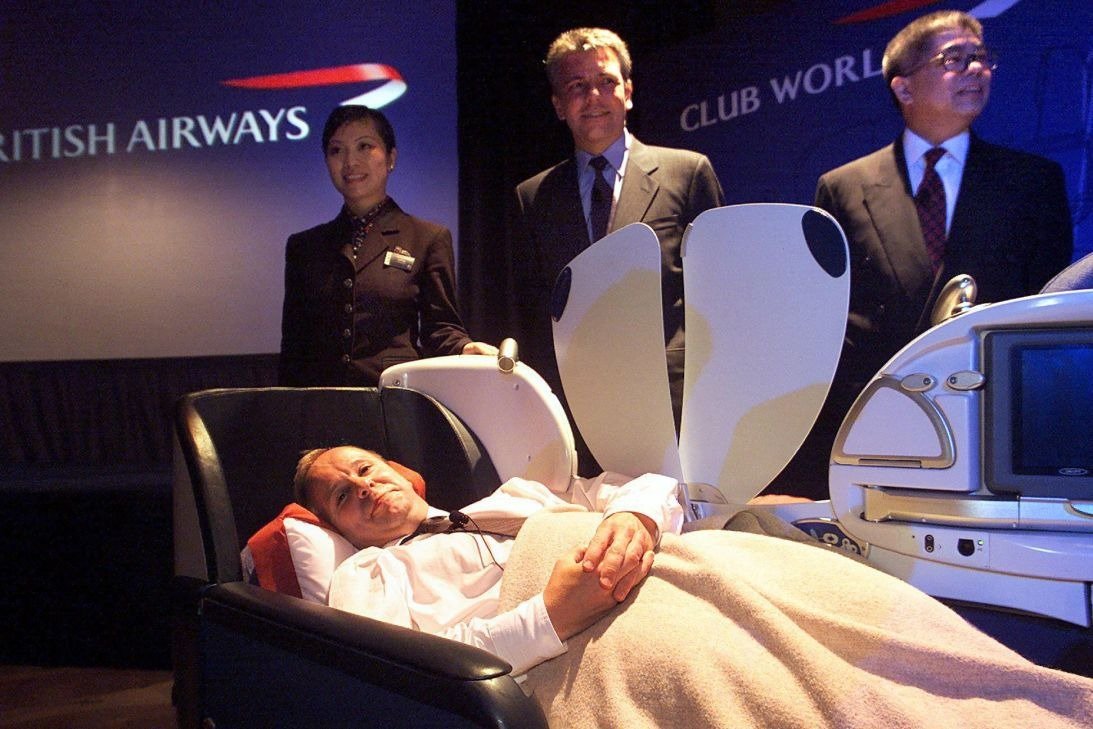
The evolution of premium travel has shifted dramatically since the 1990s, when first-class seating was essentially limited to oversized recliners, as famously depicted in the film “Home Alone.” Following the introduction of the world’s first lie-flat seat by British Airways in 2000, front-row cabins have transformed into high-tech, private mini-apartments. Today, airlines like Lufthansa and Swiss are rolling out suites featuring climate control and advanced connectivity, but these innovations introduce complex regulatory hurdles that can delay deployment by years.
Industry experts note that certifying a new seat design now takes at least six months longer than it did prior to the Covid-19 pandemic, when lead times typically spanned one to two years. Alaska Airlines CEO Ben Minicucci highlighted the lengthy nature of this cycle in May, noting that the process of imagining, designing, testing, certifying, and building a new product is a three-year endeavor. Even when airlines attempt to mitigate risk, the path to approval remains fraught with challenges.
A significant driver of these delays is the industry’s resistance to standardization. While scaling production would benefit from uniform designs, airlines are prioritizing bespoke configurations to differentiate their brands. Recaro CEO Mark Hiller explained that the intense demand for unique, customized cabin features is creating a persistent bottleneck. This trend is further complicated by federal regulators, who are applying stricter scrutiny to crash safety and human factors testing. FAA Administrator Bryan Bedford noted in May that the agency is encountering premium seat designs that fail to meet essential impact safety standards.
The shift toward increased privacy, characterized by the addition of walls and doors, has made the certification process exponentially more complicated. United Airlines Chief Commercial Officer Andrew Nocella observed that the current cabin environment is vastly different from the open-plan designs of a decade ago. Every new wall, high-tech screen, or custom textile requires rigorous assessment for flammability, dynamic impact, and Head Injury Criteria, according to ZIM Aircraft Seating Group CEO Raffael Rogg.
Airlines, manufacturers, and regulators are all working to address the logjam. Boeing Commercial Airplanes CEO Stephanie Pope emphasized that while engineers can solve technical challenges, the time required for certification remains a critical factor in delivery schedules. Part of the industry’s strategy involves identifying risks earlier in the development phase, such as ensuring flight attendants maintain clear sightlines over privacy partitions. While the FAA is collaborating with international partners to streamline approvals, executives like Hiller warn that the bottleneck may worsen before it improves, as the surge in demand for premium travel continues to outpace the industry’s capacity to certify new hardware.
Even when carriers attempt to bypass custom-design traps, they are not immune to these issues. KLM, for instance, opted for an off-the-shelf model from manufacturer Stelia that was already in service on Air France. Despite this, the suites remain blocked off as they await approval from the European Union Aviation Safety Agency (EASA), which KLM states is currently applying a revised interpretation of regulatory requirements. The report also notes that stepping onto a brand-new, ultra-modern Airbus A350, and walking past 34 of the grandest business-class suites in the sky — only to be told no one is allowed, imagine booking a ticket on one of Europe’s premier airlines. The report also notes that sitting completely empty at 35,000 feet, the luxury pods — complete with lie-flat beds and sliding privacy doors — could be entirely off-limits when departure day rolls around. The report also notes that when the McCallister family dashes onto their flight to Paris in the 1990 film “Home Alone,” barely making it after an alarm clock failure, the parents — having waved their kids into coach — turn left into first class an. The report also notes that stepping onto a brand-new, ultra-modern Airbus A350, and walking past 34 of the grandest business-class suites in the sky — only to be told no one is allowed to sit in them, imagine booking a ticket on one of Europe’s premier airlines. The report also notes that getting regulatory clearance to fly them is harder than ever, creating a production bottleneck that is about to become visible in the sky, as premium seats have become increasingly complex. The report also notes that how did we get to a place where seats are actually too fancy to fly in. The report also notes that it starts by rewinding the tape a few decades. The report also notes that when the McCallister family dashes onto their flight to Paris in the 1990 film “Home Alone,” barely making it after an alarm clock failure, the parents — having waved their kids into coach — turn left into first class and settle into what were essentially comfortable, oversized recliners.