

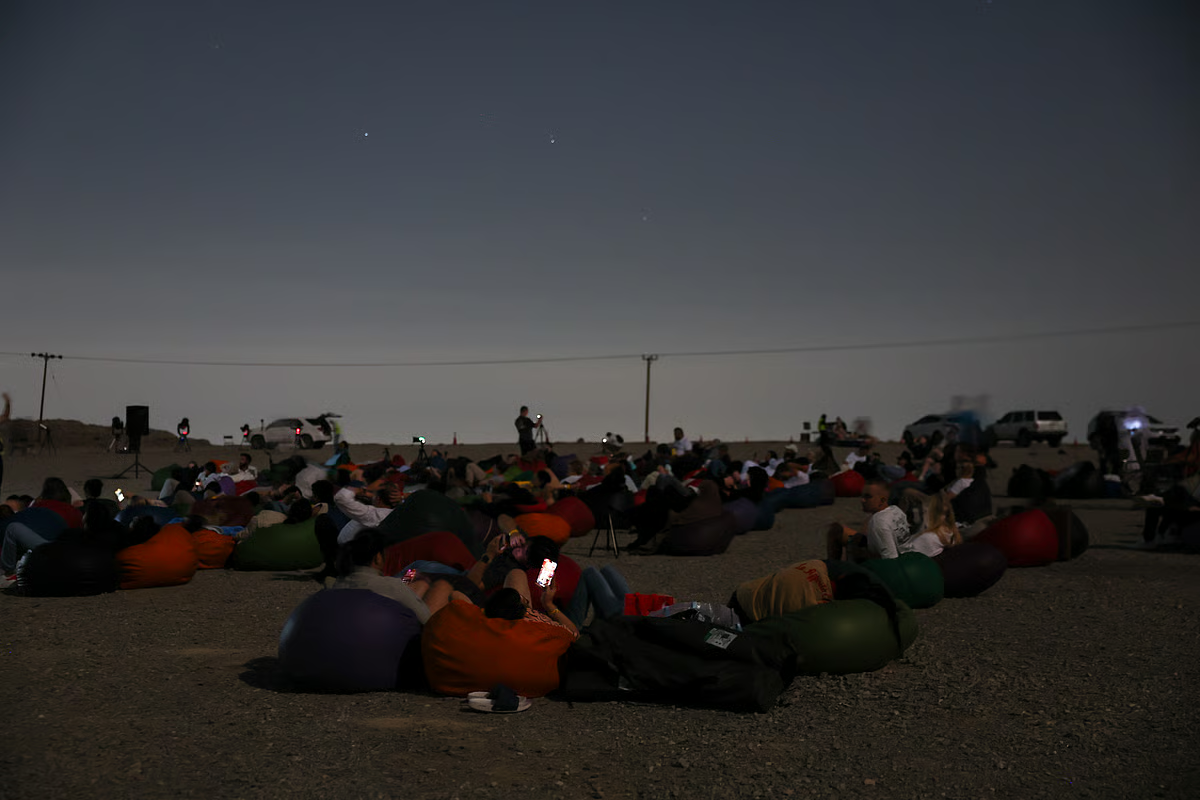
The Perseids may have delivered their headline-making display, but the UAE’s night sky has plenty more to offer for the remainder of the year. From upcoming meteor showers to a rare lunar event, there are several key dates for enthusiasts to mark on their calendars.
For anyone who missed the Perseids, there is also a penumbral lunar eclipse occurring on August 28, 2026. This will be a subtle event visible around dawn, with the Moon positioned close to the western horizon, making it a rewarding bonus for dedicated skywatchers rather than a major spectacle.
You do not have to wait for a specific meteor shower to enjoy the cosmos. On a clear, moonless night, some of the UAE’s vast deserts offer spectacular, unobstructed views of the Milky Way, distant planets, constellations, and occasional shooting stars.
The fundamental rule for stargazing is simple: the darker the sky, the more stars you will see. You do not need an observatory, an expensive telescope, or a professional camera to experience the UAE’s night sky; you only need darkness, clear weather, patience, and a safe place to park.
When observing meteor showers, it is important to manage expectations. Do not expect the sky to fire off stars continuously, as meteor activity typically comes in bursts. Furthermore, factors such as light pollution, haze, clouds, and moonlight can dramatically reduce the number of visible meteors.
The upcoming meteor calendar begins with the Orionids on October 21–22, which are fast meteors associated with Halley’s Comet. These are followed by the Leonids on November 17–18, known for occasional spectacular meteor storms, although most years produce more modest activity.
The Geminids, occurring December 13–14, are the major event to circle on your calendar. As one of the year’s strongest annual meteor showers, they are capable of producing bright and colourful meteors under dark skies. The American Meteor Society lists a peak rate of up to about 120 meteors an hour under ideal conditions, though actual rates seen from any particular location will be lower.
For those who prefer a guided experience, the Dubai Astronomy Group maintains a calendar of events, including scheduled sessions for the Leonids and Geminids at Al Qudra. If you are planning your own trip, Al Qudra is the easiest destination from Dubai, while Mleiha offers a more organized experience suitable for families.
For serious Milky Way hunting, enthusiasts often make the longer drive to Al Quaa, known for its exceptional darkness. Alternatively, those seeking cooler air and mountain vistas should head to Jebel Jais. Regardless of the location, ensure you mark December 13–14 for the Geminids to conclude your year of stargazing.
Up to 100 meteors/hour: Why Perseids in UAE is special
Best Perseid meteor shower since 2018 nears UAE
6 free spots to watch Perseids meteor showers
And for the biggest meteor-show payoff later this year, mark Dec.
Dubai stargazers warned for visiting Al Khatim Desert