

The Trump administration is facing significant challenges in concluding the ongoing war in Iran, largely due to the rigid, ambitious objectives initially established by President Donald Trump and his senior officials. Early in the conflict, these goals included total Iranian surrender, regime change, the complete prevention of nuclear weapon development, and the cessation of support for regional proxy groups like Hezbollah.
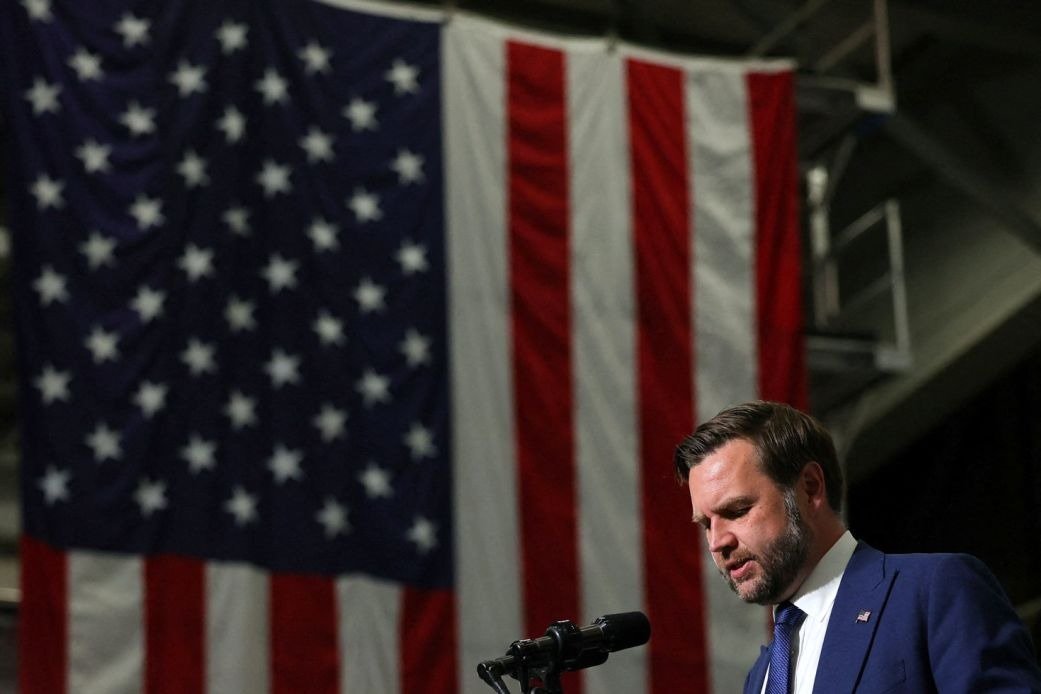
Now in its sixth month, the list of objectives has undergone a noticeable contraction. Vice President JD Vance recently offered a revised framework that suggests the administration may be preparing to accept a significantly less comprehensive outcome. During a Fox News appearance on Thursday, Vance identified two primary goals: “It’s ensuring that the Gulf countries continue to send oil and gas to the world economy so that we have energy price stability,” he stated, adding, “That’s goal number one: Keep oil and gas cheap for Americans all over our country. And then, obviously, goal number two is ensure that Iran never gets a nuclear weapon.”
This prioritization represents a departure from the administration’s previous rhetoric, which consistently positioned nuclear non-proliferation as the paramount concern. When questioned about Vance’s comments on Friday, White House press secretary Karoline Leavitt asserted that “both goals are equally as important to the president.” However, the inclusion of domestic energy pricing as a top-tier objective is a marked shift, particularly given that President Trump previously dismissed economic concerns as a factor in his war strategy. In May, when asked if he considered the financial impact on Americans while resolving the conflict, Trump replied, “Not even a little bit,” signaling that denuclearization was his sole priority.
Trump reiterated this stance on Friday, stating he would “never apologize” for Americans paying higher gas prices given the stakes in Iran. The administration’s shifting priorities have been evident for months. Earlier in the year, officials frequently cited a rotating list of four goals, which sometimes included the destruction of missile infrastructure or the dismantling of specific military branches, though these lists were inconsistent and appeared to be developed in real-time.
Notably, none of those earlier lists included the maintenance of low domestic energy prices. Because the Strait of Hormuz remained open prior to the war, focusing on oil and gas stability essentially advocates for a return to the pre-war status quo, leaving denuclearization as the only potential new achievement. This pivot aligns with other signs of a softening stance; by June, the administration entered a memorandum of understanding with Iran that omitted several previously central demands.
President Trump has also hinted at scaling back his nuclear requirements over the past two months. While the administration previously demanded that Iran surrender its enriched uranium, the president has recently suggested that sufficient damage has been inflicted on the nuclear program and that remaining materials are buried too deep to be retrieved. He has even claimed that Iran is already denuclearized, suggesting he may be preparing to accept a less restrictive deal than originally promised.
Ultimately, framing energy prices as “goal number one” fits a broader pattern of the administration moving away from its initial, hard-line objectives. If the primary focus has indeed shifted toward restoring pre-war economic stability, it underscores how limited the accomplishments of this six-month conflict have been in relation to the administration’s original, far-reaching aims. The report also notes that offering the latest indication that the administration might be preparing to settle for less — maybe even a lot less, and Vice President JD Vance appears to have pared it back recently in a remarkable way. The report also notes that i wrote in March about how the administration frequently listed four goals for the war — but how the four goals frequently differed depending upon who was speaking. The report also notes that but others only mentioned the navy, some mentioned getting rid of Iran’s air force and navy. The report also notes that by May, it became clear the administration was no longer going to emphasize certain goals. The report also notes that the president has also talked about how the US government could simply monitor from space to make sure Iran didn’t try to retrieve them. The report also notes that in other words, Trump sounded a lot like a guy who knew he might not be able to cow Iran into accepting a really restrictive nuclear deal.