

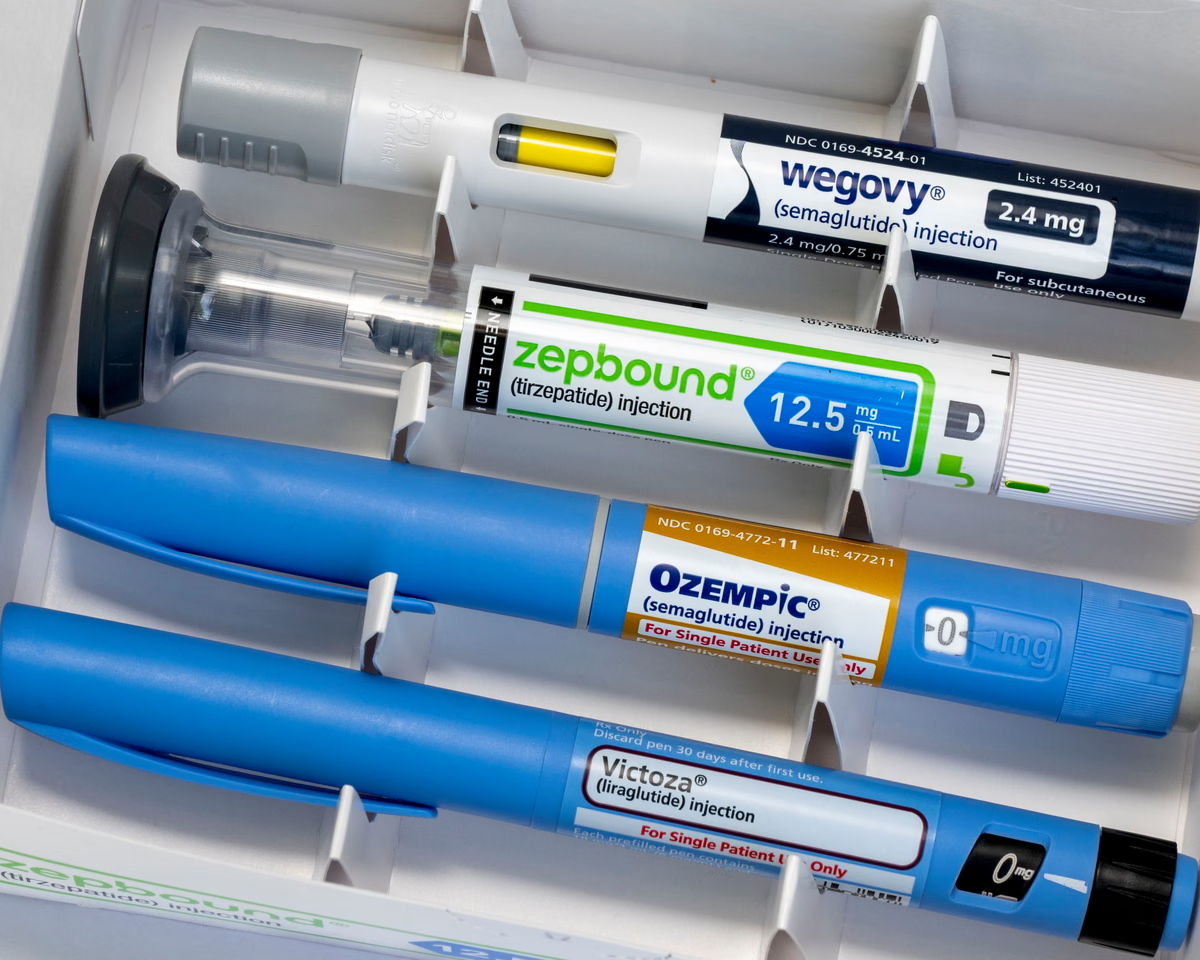
When Mercedes, a recently retired teacher in her 50s living in Canada, was told by her doctor in 2024 that she could be prescribed GLP-1 weight-loss injections, she was overcome with emotion. She recalled breaking down in the office, crying for an entire week at the prospect of finally ending a lifelong struggle with her weight. She viewed the medication as a long-awaited solution to her burden and shame.
However, her optimism faded as the months passed without results. Mercedes’ treatment journey included a nine-month stint on Ozempic, followed by four months on Wegovy, a brief period on the oral medication Contrave, several months on Mounjaro, and finally, nine months on Zepbound. Despite this rigorous regimen, she stated, “Nothing has worked.”
Mercedes is part of a small but significant group of patients for whom these high-profile medications, which have gained widespread attention for their transformative effects, fail to produce the expected weight loss. While clinical trials indicate that participants typically lose between 15% and 20% of their body weight, between 9% and one-third of trial participants lose less than 5% of their total body weight, depending on the specific drug and dosage.
The medications in question, such as Ozempic and Wegovy, utilize semaglutide to mimic the GLP-1 hormone naturally found in the body. Newer options like Mounjaro and Zepbound contain tirzepatide, which targets both GLP-1 and another hormone to achieve even more potent results. For those who do not respond, the experience is deeply demoralizing. Mercedes described the impact on her self-esteem as devastating, noting that the high cost of the drugs only adds to the frustration of seeing no progress.
Professor Alexander Miras, an obesity expert at Ulster University, emphasizes that a lack of response is not a failure on the part of the patient. He explains that if a drug does not successfully reduce hunger and food intake, it is simply not working for that individual. He characterizes the situation as a matter of luck rather than a personal shortcoming, noting that while non-response is uncommon, it is a documented reality.
For Mercedes, the struggle went beyond the medication itself. She attempted to maintain strict lifestyle changes, yet the drugs failed to silence the constant, intrusive thoughts about food. She described her cravings as being akin to heroin withdrawal. While she managed to lose 20 pounds in one month through extreme personal discipline, she attributed this success to her own efforts rather than the medication.
Other patients report similar experiences. Yury K., a 57-year-old from Canada, maintained a consistent exercise routine involving kettlebells and a controlled diet while taking Wegovy for six months. Although he noted improvements in his cholesterol and blood sugar levels, his weight remained stagnant at approximately 242 pounds. He expressed frustration that the public discourse often assumes these drugs work for everyone, which did not align with his reality.
Lucille, a 53-year-old based in Luxembourg, shared that she has been using GLP-1 medications for four years. While they initially helped with insulin resistance, she found that they eventually stopped aiding in weight loss, even after transitioning to the highest dose of Mounjaro. She described the feeling as if the medication had ceased to have any effect on her body at all.
Researchers are currently investigating why these variations in response occur, hoping to improve cost-effectiveness, tailor treatments, and minimize side effects. Professor Miras notes that factors such as motivation, education, and socioeconomic status do not appear to predict how a patient will respond. However, demographic factors like age and sex do play a role, with older individuals and men generally losing less weight.
Scientific studies also suggest that ancestry may influence efficacy, with the drugs appearing most effective in individuals of European descent and least effective in those of African American ancestry. Dr. Mahesh Umapathysivam, an endocrinologist at Adelaide University, points to the potential role of hormones, noting that estrogen appears to alter the GLP-1 response. This is supported by observations that men and women respond differently and that menopausal hormone replacement therapy is associated with greater weight loss in semaglutide users.
Genetics also remain a key area of study. Recent research has identified a genetic variant that affects the brain receptors targeted by these drugs. Findings suggest that individuals carrying this variant may see different outcomes, with some studies indicating that those with two copies of the variant may experience more significant weight loss than those without it. The report also notes that ozempic, a type 2 diabetes medication, and Wegovy, which is licensed for weight loss, both contain a drug called semaglutide that mimics a hormone that occurs naturally in our bodies: GLP-1. The report also notes that with clinical trials suggesting they can help participants lose an average of 15% to 20% of their body weight, the excitement around such “GLP-1s” has been hard to miss: the medications have grabbed headlines. The report also notes that “I just thought: ‘No, I’ve got to get somewhere … I’m going to die of obesity’,” she said. The report also notes that suppresses appetite and increase the production of insulin – meaning many people lose weight, these medications reduce the rate at which food is emptied from the stomach. The report also notes that studies suggest they could help with conditions ranging from heart problems and addictions to fatty liver disease. The report also notes that to an extent, the extreme effort paid off.