

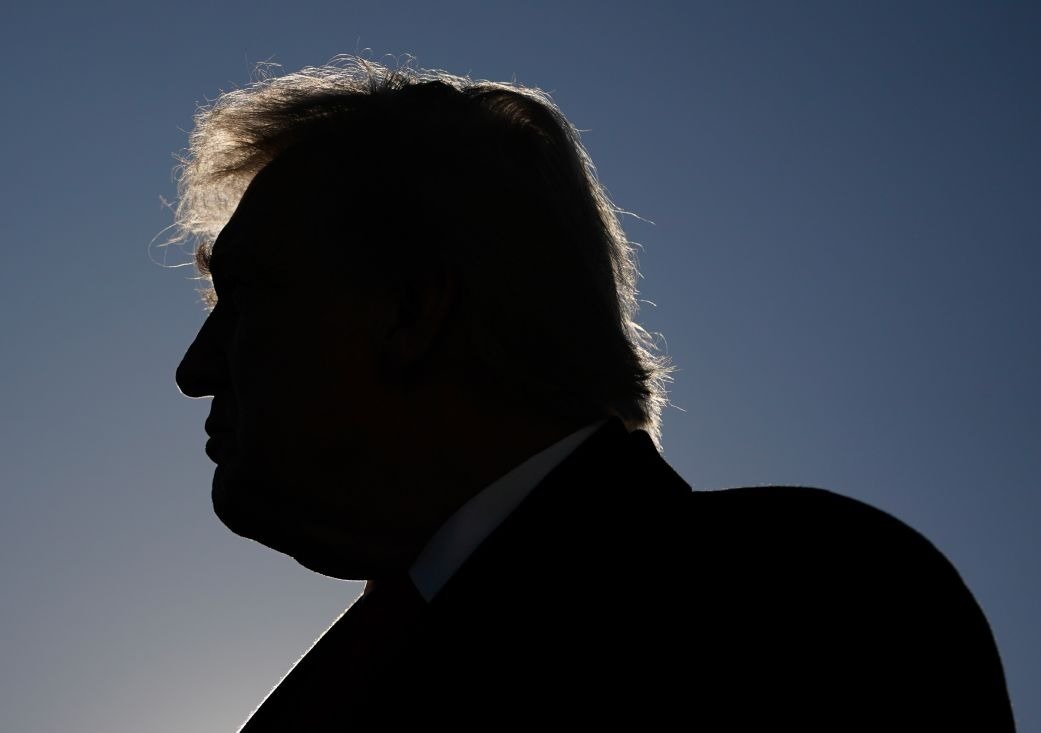
Six months after President Donald Trump initiated military action against Iran, the conflict has evolved from what he initially termed a brief “excursion” into a protracted struggle with far-reaching consequences. While the administration’s original objectives—ranging from regime change to the total dismantling of Iran’s nuclear program—remain unmet, the war has triggered significant global instability, impacting energy markets and straining international security frameworks.
Emily Harding, a vice president at the Center for Strategic and International Studies, observes that while the situation has not yet spiraled into a full-scale global crisis, the foundations of international stability are undeniably weakening. She notes that global adversaries are closely monitoring the US response, potentially using these developments as a precedent for their own future planning. Harding expressed particular concern regarding the long-term implications for a potential conflict with China, noting that the current focus on Iran has diverted critical attention and resources from other strategic theaters.
The military strain is evident in the redirection of resources, including ammunition originally designated for Ukraine. Ukrainian President Volodymyr Zelensky recently stated that his nation possesses only one-tenth of the interceptor missiles required to counter Russian ballistic missile strikes. This shortfall has contributed to the deadliest summer for Ukrainian civilians since May 2022. Meanwhile, the global economic fallout from the closure of the Strait of Hormuz has inadvertently provided Russia with diplomatic leverage. Alexander Gabuev, director of the Carnegie Russia Eurasia Center in Berlin, highlighted that Russian President Vladimir Putin successfully leveraged the energy and fertilizer price hikes caused by the Iran conflict to court ASEAN leaders during a summit in Kazan this June.
The Korean Peninsula has also emerged as a point of concern. With 28,500 US troops stationed in South Korea, the region relies heavily on consistent military readiness. However, the Trump administration has significantly scaled back annual joint exercises and removed the 7th Fleet’s sole aircraft carrier from the Western Pacific. Analysts warn that these reductions hinder Seoul’s ability to assume wartime control of its forces and weaken the US deterrent posture. Furthermore, the administration has signaled a willingness to engage in talks with North Korean leader Kim Jong Un, even as Pyongyang continues to expand its nuclear arsenal.
Regarding the path forward in Iran, Harding suggests the administration faces a difficult choice between pursuing an unattainable total victory or settling for a strategy that renders Iran’s nuclear program unusable. She posits that if the US focuses on maintaining the destruction of key nuclear sites and managing the weakened proxy network, the cost could be significantly lower than the current trajectory. However, the immediate reality remains a volatile mix of Iranian retaliatory strikes against US bases and the ongoing, expensive challenge of securing the Strait of Hormuz.
Despite the broader security risks, the conflict has forced a shift in global military dynamics. Ukraine, for instance, has accelerated its development as a drone superpower, spurred by the necessity of four years of continuous warfare. As the administration weighs its next steps, the primary challenge remains balancing the immediate demands of the Iran conflict against the risk of leaving other critical regions vulnerable to opportunistic aggression. The report also notes that the conflict has become a nightmare for almost everyone even remotely involved in it, six months later. The report also notes that for the millions living elsewhere across the Middle East, and for consumers around the world who are struggling with higher costs, it’s been a disaster for the Iranian people. The report also notes that even though the goalposts keep shifting: from initially demanding a complete Iranian surrender, regime change and the abandoning of the Islamic Republic’s nuclear ambitions, to more recently simply demanding the reopening of the Strait of Hormuz and putting the brakes on Tehran’s nuclear program, yet Trump’s war goals remain unfulfilled. The report also notes that “This is the kind of thing where the global adversaries are going to be taking note of the situation and learning more about how the US reacts in certain moments and then folding that into their planning. The report also notes that but we haven’t seen anybody take advantage of it yet,” she said. The report also notes that “It’s more that some foundations are being weakened, not that we’re actually seeing the building start to shake.”. The report also notes that the US-Israeli attacks have sparked a furious retaliation from Tehran.