

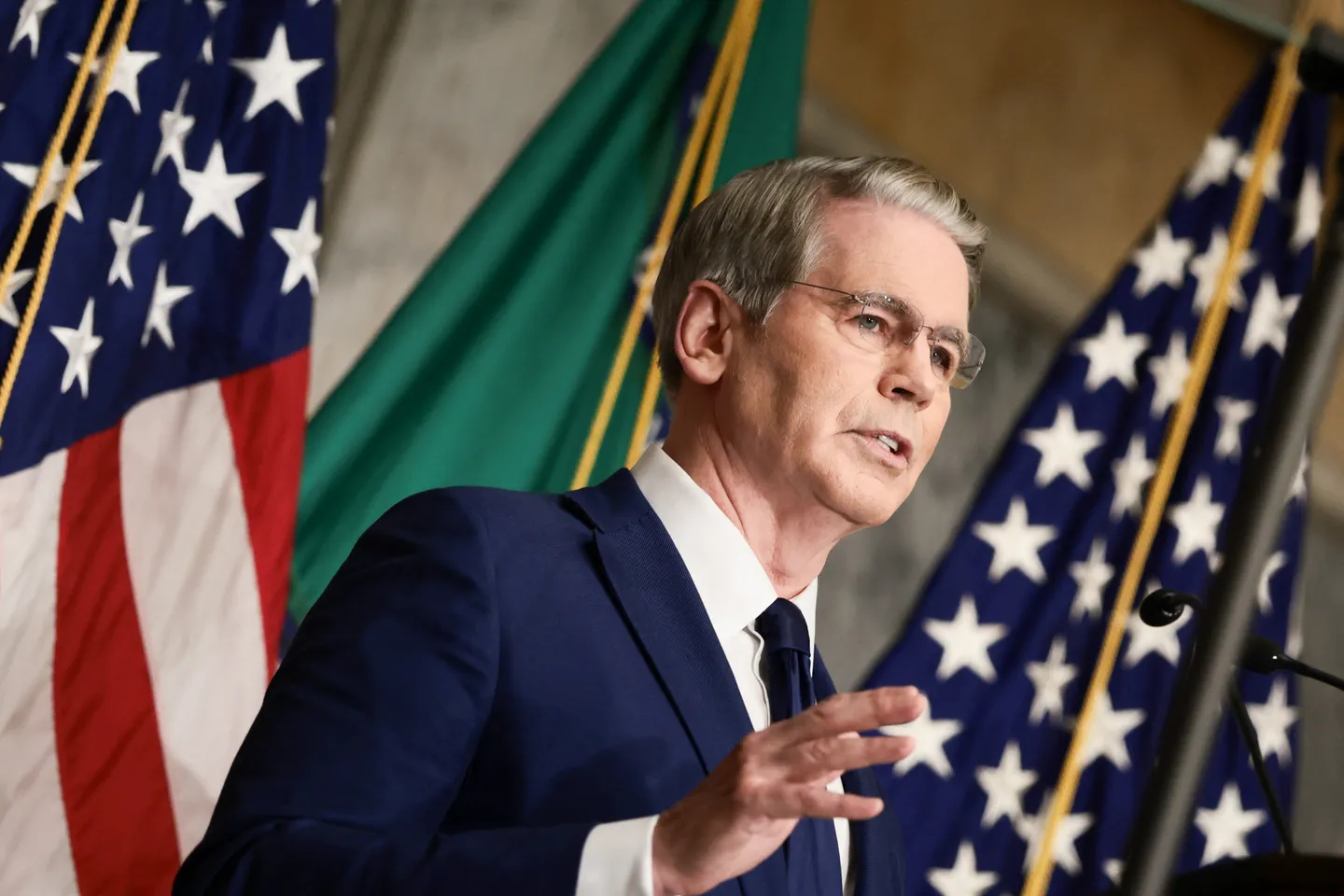
On August 24, US Treasury Secretary Scott Bessent announced the launch of “Operation Economic Outcast,” a new suite of unprecedented measures designed to sever the remaining financial lifelines supporting the Iranian government. This escalation occurs six months into the ongoing US-Israeli conflict, marking a significant shift in Washington’s strategy to exert maximum pressure on Tehran.
The new sanctions package focuses on five critical sectors: digital assets, technology, gold, aviation, and shipping. By explicitly targeting cryptocurrencies and related financial instruments, the US aims to close regulatory gaps that have previously allowed Iran to bypass traditional financial restrictions. Analysts describe these measures as an “embargo-like instrument of war,” intended to create a comprehensive blockade that compounds the economic strain caused by the existing naval blockade of the Strait of Hormuz.
Historically, US sanctions have been categorized as either “primary,” which restrict US entities from dealing with Iran, or “secondary,” which penalize third-party actors outside the US for engaging in trade with Tehran. Operation Economic Outcast leans heavily on secondary sanctions, utilizing Washington’s diplomatic and economic leverage to force international actors to isolate the Iranian market. This approach carries inherent risks, as it may create friction with nations that the US otherwise seeks to maintain as partners.
The Iranian economy has already been severely weakened by years of stagnation, high inflation, and unemployment. The unofficial exchange rate of the Iranian rial recently plummeted to a record low of two million to the dollar. Before the conflict began on February 28, Iran was already operating under a blanket ban on oil sales through Western banking and shipping channels. To survive, Tehran relied on “dark-fleet” tankers—uninsured, ageing vessels that disabled tracking devices—and utilized small, independent Chinese refineries known as “teapots” to process oil rebranded as Malaysian or Middle Eastern crude.
Mustafa Caner, an Iran expert at Sakarya University’s Middle East Institute, notes that the new measures represent a qualitative shift. By targeting digital assets and demanding robust oversight across various domains, the US is attempting to neutralize the shadow networks Iran used to circumvent previous restrictions. Furthermore, the integration of the Russian-created “Mir” electronic card payment network across Iran has provided a domestic alternative to Western systems, though the new US policy seeks to disrupt such workarounds.
The impact of these sanctions is already being felt in Tehran’s diplomatic and trade relations. The United Arab Emirates, which was previously Iran’s largest import source with bilateral trade reaching roughly $28 billion in 2024, recently announced it is cutting all trade ties with the country. This move is expected to inflict significant damage on the Iranian economy. Meanwhile, India, which has historically maintained commercial links and purchased Iranian oil, faces a difficult test in balancing its trade interests with its relationship with Washington.
China remains a wildcard in the effectiveness of these sanctions. Before the war, Beijing purchased 90 percent of Iran’s crude oil. While the US expects the new, more stringent regime to be harder to evade, Chinese officials have maintained that their cooperation with Iran remains within the framework of international law. A Chinese foreign ministry spokesperson recently vowed to protect the country’s commercial interests in the face of the new US rules.
Tehran has officially dismissed the new sanctions as an act of desperation, insisting that the measures will fail to defeat the government. Ali Vaez, deputy programme director for the MENA region at the International Crisis Group, suggests that while Washington has the capacity to inflict substantial economic pain, the long-term political outcome remains uncertain. He notes that while military pressure often unites a population against an external enemy, economic deterioration can lead to internal blame, though some factions within Iran may respond by advocating for a prolonged conflict to increase the cost of US involvement. The report also notes that through which one-fifth of global energy supplies passed before the war, but Tehran still refuses to give up its de facto control of Hormuz. The report also notes that a business or bank can’t make transactions in major currencies or use SWIFT, the mainstay of the global payments network that banks rely on to process cross-border trade, once sanctioned. The report also notes that successive US governments have used sanctions over the decades to pressure Tehran into ending its nuclear programme and support for regional proxies. The report also notes that the other type of sanctions are called “secondary” because they go a step further and penalise third-party actors outside of the US for trading with Iran. The report also notes that however, Tehran has adapted to the sanctions regime, to a limited extent. The report also notes that second, the US is now deliberately targeting third parties doing business with Iran.