

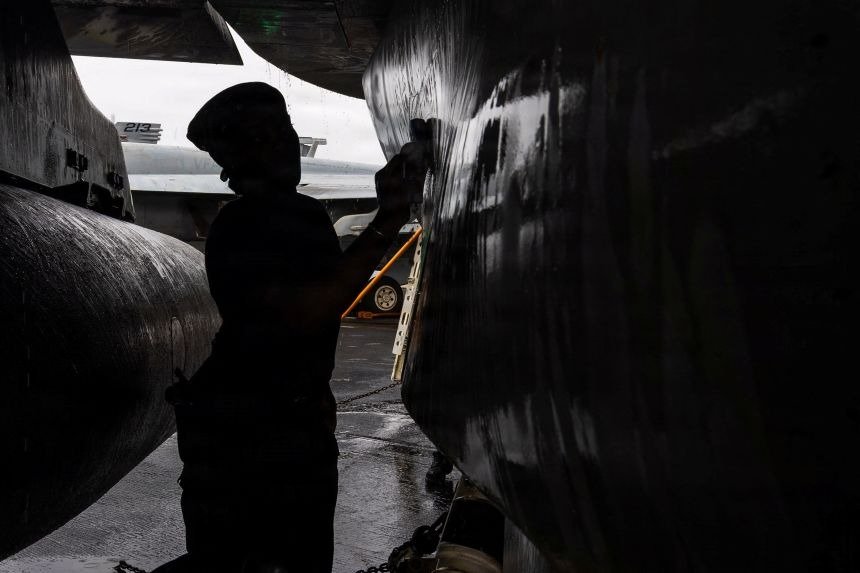
The USS Abraham Lincoln is currently engaged in a record-setting deployment, having remained away from its home port for over six months. This extended mission has placed significant pressure on the crew, who report declining morale and growing concerns regarding mental health. The ship is currently on track to potentially surpass the record for the longest deployment of a US carrier since the Vietnam War, a milestone recently eclipsed by the USS Gerald R. Ford, which completed a 326-day mission involving operations against Iran and Venezuela.
A crew member stationed on the Lincoln described the atmosphere aboard as increasingly difficult, noting frequent discussions among sailors about suicidal ideation. “Everyday we wake up and listen to our Captain speak, we are desperately hoping and anxious for updates on our return,” the sailor told reporters. The Navy, however, stated that it has not observed a statistical increase in suicidal ideation or attempts aboard the vessel, emphasizing that every service member’s well-being is treated with high priority. A US official further noted that the military does not believe there is a direct correlation between the duration of a deployment and thoughts of self-harm.
Beyond mental health, the physical conditions on the ship have deteriorated. Sailors and their families report intermittent food shortages, limited access to hygiene products, and frequent failures in water and sanitation systems. One sailor, speaking anonymously, recalled that while hygiene products were once readily available in the ship’s store, current supplies are severely restricted. The father of another crew member expressed frustration with the situation, noting that while his child enlisted to serve, the current environment is testing the limits of the crew.
Defense expert Kate Kuzminski of the Center for a New American Security warned that the current deployment model is disconnected from reality. She argued that the Navy must realign its expectations to better support sailors and their families, noting that prolonged absences could drive personnel to leave the service entirely. “What does it do to a family who’s newly assigned to the Ford?” Kuzminski asked, highlighting the potential long-term impact on retention. These concerns are echoed by reports of two sailors from the Lincoln strike group jumping overboard in recent months; both were rescued alive, while others were reportedly prevented from attempting similar actions.
The logistical strain is also affecting the fleet’s future. The USS Kennedy, which began sea trials this week, is not expected to be delivered until March 2027—nearly two years behind schedule. Furthermore, design changes for the USS Doris Miller are expected to cost billions and could delay its service entry until the end of the next decade. Such delays force the Navy to either extend existing deployments or push aging Nimitz-class carriers beyond their 50-year service life, creating a cycle of maintenance issues and equipment fatigue.
Retired Rear Adm. Bruce Gillingham, former Navy Surgeon General, acknowledged that while world events often necessitate longer deployments, the current trend is placing unprecedented stress on both the ships and the personnel. Data reviewed by analysts shows that the median length of carrier deployments has risen steadily since 2020. Although the Navy aims for a predictable three-year cycle featuring 210-day deployments, these targets have been consistently missed since the October 2023 Hamas attacks against Israel, which triggered a series of extended missions for carriers like the USS Dwight D. Eisenhower and the Ford.
The political response to these conditions has been varied. During a recent event, President Donald Trump addressed questions regarding the Lincoln’s deployment length, suggesting the duration was not unusual. This prompted sharp criticism from family members, including the wife of a service member who urged leadership to take accountability for the conditions aboard the ships. As the Lincoln nears nine months away from San Diego, the strain on families continues to mount, with care packages and communication becoming vital lifelines for those serving at sea. The report also notes that the crew member said, and there were regular strains on essential amenities — toilets and water fountains around the ship frequently closed and hot water often unavailable. The report also notes that “You used to be able to go to the ship store and get as many items as you want, with every hygiene product consistently available,” one sailor, who requested anonymity due to fear of reprisal, told. The report also notes that said he understands sailors like his child join the Navy to do their jobs and doing them in combat is inherently hard – but he que, the father of a sailor aboard the Lincoln who spoke to on the condition of anonymity. The report also notes that largely due to the combat that has kept the carrier from making stops at friendly ports, other sailors aboard the Lincoln who spoke with described conditions unlike their prior deployments. The report also notes that said he understands sailors like his child join the Navy to do their jobs and doing them in combat is inherently hard – but he questions why relief hasn’t come sooner and whether some of the mental strain from the long deployment could have been prevented, the father of a sailor aboard the Lincoln who spoke to on the condition of anonymity. The report also notes that the wife of one service member aboard the Lincoln who requested anonymity told Jake Tapper on Friday that the president doesn’t think “before he talks,” and urged both he and Secretary of Defense Pete Hegseth to have “some empathy.”. The report also notes that according to Adm, the Navy’s plan has aimed to provide predictable three-year cycles for sailors that include a seven-month/210-day deployment. The report also notes that most deployments remained under or within a few days of the target length, between 2018 and 2022.