

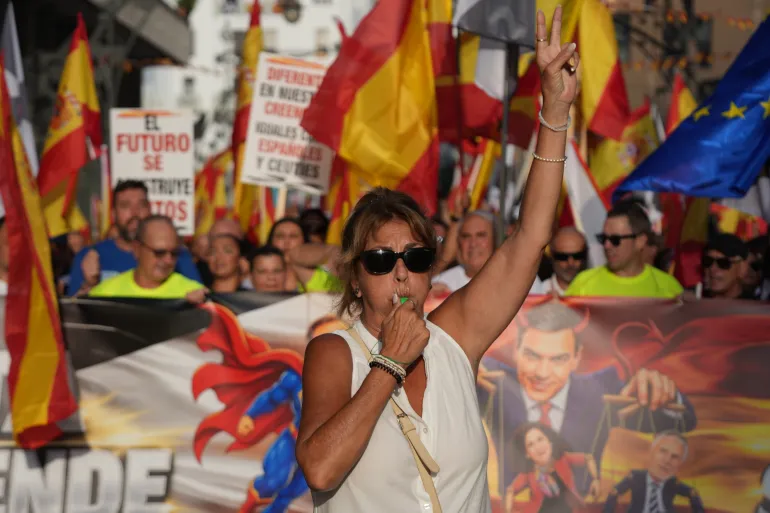
Massive demonstrations erupted across Spain on Wednesday as citizens voiced their frustration over the ongoing migration crisis in Ceuta, the Spanish territory located on the North African coast. In Madrid alone, approximately 50,000 people gathered to protest, while residents in Ceuta marked Ceuta Day—a local holiday commemorating the 15th-century Portuguese takeover—by draping the city and national flags over their shoulders.
The protests come just over a month after a massive surge on July 30 and 31, when more than 70,000 migrants and asylum seekers crossed from Morocco into the territory. The event resulted in at least 80 deaths. Chants heard during the demonstrations included calls to “expel the invaders” and slogans asserting that “Ceuta is not for sale, Ceuta must be defended.”
While many of those who arrived have since returned to Africa, thousands remain in the territory. Official government estimates suggest about 5,000 people, including 1,200 minors, are still present, though local figures indicate the number is significantly higher. Among those remaining is 40-year-old Otman Ianaya, who arrived by swimming with his wife and two daughters in search of better prospects, noting that the lack of work in Morocco drove his decision to seek a future in Spain.
The influx has placed immense strain on local resources, with many migrants forced to sleep on beaches. Although the government has pledged 309 million euros ($357m) in aid and expanded emergency housing, critics argue these measures are insufficient. The resulting instability has led to isolated violence, including fights, the stoning of a military patrol, and reports of sexual assault. Residents have also clashed with police and destroyed belongings belonging to migrants, with protesters like Gema Guillen describing the streets as chaotic.
The crisis has deepened political divisions within Spain. Juan Jesus Vivas, the regional leader of Ceuta and a member of the conservative Popular Party, has characterized the situation as a violation of territorial integrity. Conversely, Territorial Policy Minister Angel Victor Torres accused the opposition of exploiting the humanitarian situation to attack the government rather than providing constructive support.
Prime Minister Pedro Sanchez attributed the surge to a combination of a misread court ruling and online disinformation campaigns. He further alleged that negative coverage of the crisis has been amplified by Russian and Israeli-linked accounts, citing findings from Spanish intelligence, though he provided no specific evidence for these claims.
Amid the political standoff, humanitarian groups are calling for a more measured approach. Halima Ahmed, representing the nongovernmental organization Luna Blanca, emphasized the need for empathy toward those in vulnerable situations. While acknowledging that the public is exhausted and frustrated by the circumstances, she stressed that such feelings do not justify violence against those seeking asylum or economic opportunity. The report also notes that “There is no work in Morocco,” he told the news agency AFP. The report also notes that “I want to build a future in my life.”. The report also notes that but critics have blasted the effort as inadequate to answer the needs of so many people, the Spanish government has worked to expand emergency housing and increase funds to social services.